Benny Lee

Mechanical Engineering, Northeastern University

Mechanical
Engineering

  • SolidWorks
  • Siemens NX
  • AutoCAD
  • Tinkercad
  • Laser cutting
  • 3D printing
Hardware projects4

Computer
Science

  • Python
  • C++
  • Java
  • MATLAB
  • SQLite
  • pytest
Software projects3

Projects

Research · Software

  • Python
  • scipy
  • pandas
  • pytest

SAM Pipeline

PEAK Summit Fellowship · Northeastern Undergraduate Research and Fellowships

“A Reproducible Pipeline for Multi-Country Social Accounting Matrix Construction”

Mentor: Prof. Mikhail Oet · Business and Social Sciences

A Social Accounting Matrix is one big table of every payment in a country’s economy over a year. It shows who sells to whom, who earns wages and profit, and what the government collects, and every row has to add up to the same total as its column. My Python pipeline builds these tables from global data, balances them, and checks them. They’re built to calibrate a planned research model that will simulate how sanctions and supply shocks spread.

Countries covered
10
Accounts in each table
140
Automated tests passing
344
Read the case study

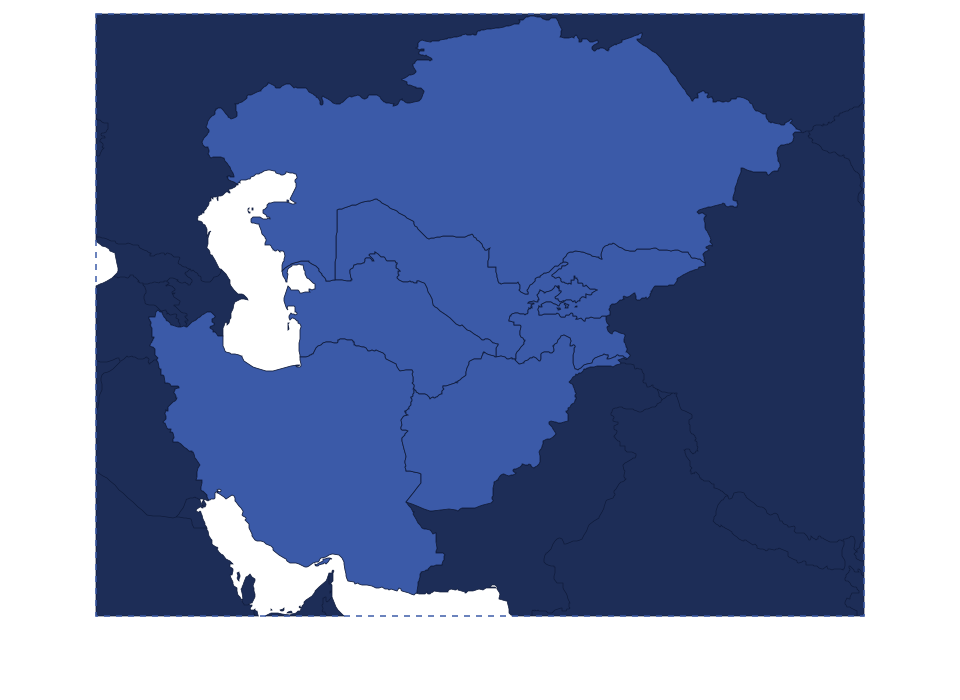
Each line stands for a trade link between two of the 10 economies built so far. The pulse shows what linking the tables would let the model do, which is follow a shock in one country, here Kazakhstan, out to its trading partners.
The goal is to link the country tables into one model. The map focuses on Central Asia and its neighbors Iran and Afghanistan, with Mongolia, Sri Lanka and the United States just off the edge.

Research · Hardware + Software

  • System architecture
  • CAD
  • C++ and Python plan
  • Team of 10

NASA L’SPACE proposal

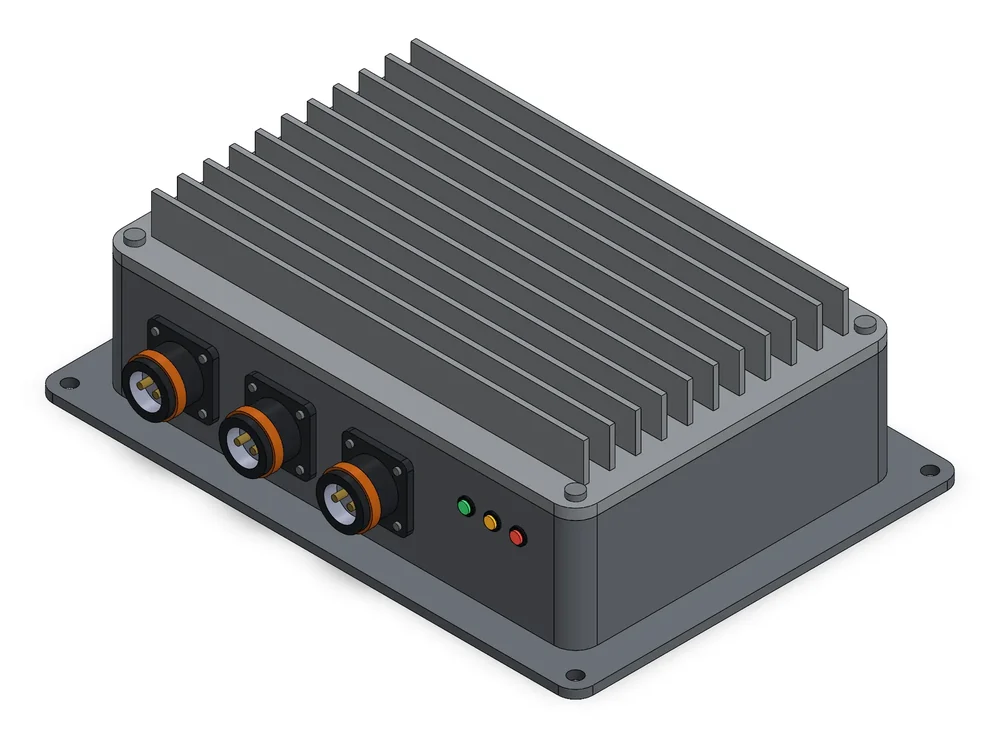
I was the principal investigator on a 10-person team that proposed smart power nodes for future Moon bases. Each node would detect a fault, isolate it, and reroute power on its own. I owned the system architecture and the CAD. The numbers here are design targets from the proposal, not test results.

Fault isolation target
<15 ms
Today’s microgrids
50–100 ms
Build plan
12 months, 4 phases
SolidWorks concept model of the smart power node: a flanged aluminum box with a finned radiator lid, two orange-banded DC bus connectors and a priority-load connector on the front, and green, amber, and red status LEDs
Concept CAD of the node, rebuilt with AI assistance after my original SolidWorks file was corrupted.

Hardware + Software

  • Fabrication
  • Python
  • Raspberry Pi Pico
  • Team of 4

Reaction-Time Game

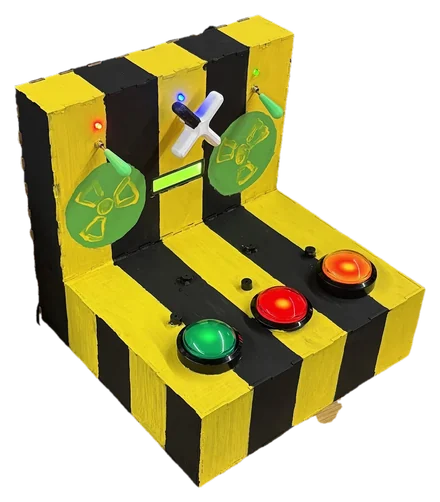
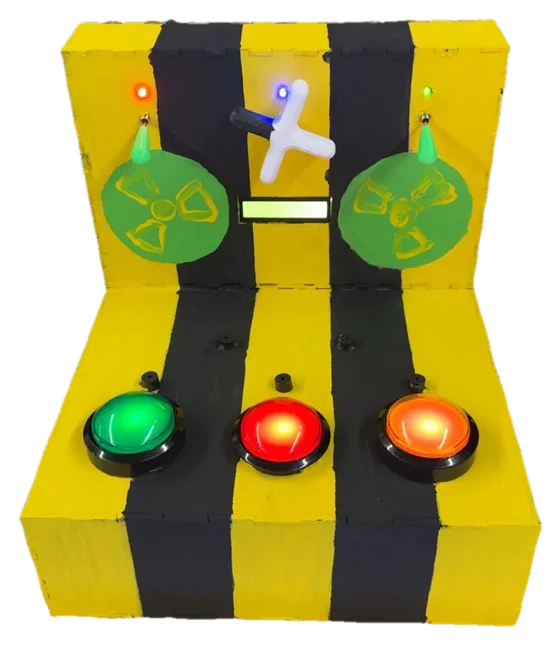
A Chernobyl-themed carnival game where you hit each input as it lights up, faster and faster, until the reactor melts down. I wrote the game logic in Python. Using stats from 30+ user trials, I tuned the speed so an average game ran under 2 minutes and calculated prize cutoffs so the game would turn a profit. I also designed and painted the outside.

Timing precision
<1 ms
Input accuracy
~98%
User trials
30+
Read the case study
Front view of the reaction game: a yellow and black striped panel with green, red, and orange arcade buttons and two radiation-symbol discs Three-quarter view of the reaction game showing its hazard-striped side walls and deep control surface
Embedded Systems Reaction-Time Game, Sep–Dec 2025

Hardware

  • Mechanical design
  • Laser cutting
  • Raspberry Pi Pico
  • Team of 4

Gamified Budget Box

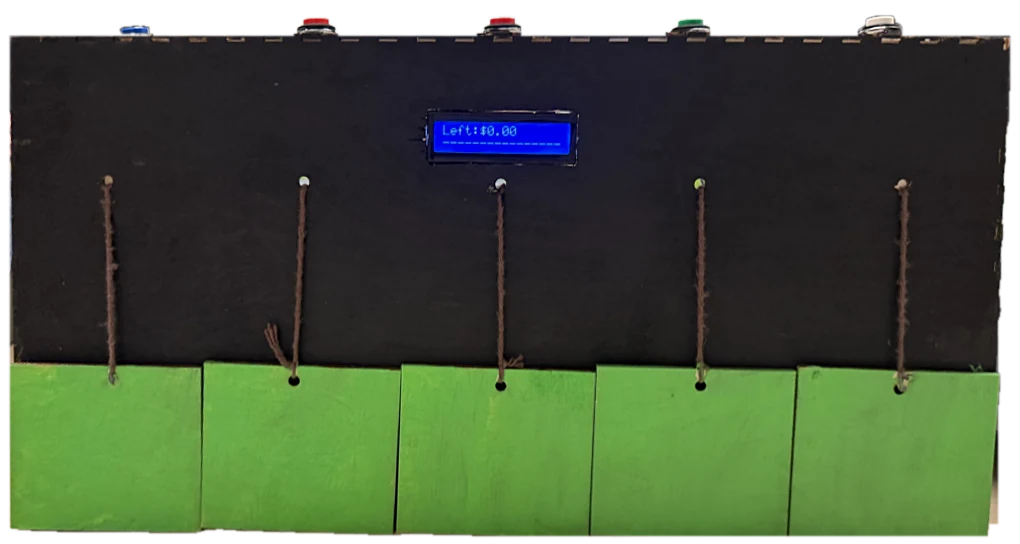
A plywood savings box with five servo-driven doors, a keypad, and an LCD that tracks your weekly spending. On a team of four, I led the mechanical design and fabrication. I drew the dovetail joints in AutoCAD and laser-cut the mounts.

Box size
18.5 × 8 × 12 in
Material cost
$22.50
Prototypes
3
Front of the finished Gamified Budget Box: black-painted plywood with an LCD reading Left: $0.00, five buttons along the top, and five green doors on strings
The finished box from the front, Jan–Apr 2026.

Hardware

  • CAD
  • 3D printing
  • Assistive device

e-NABLE Prosthetic Hand

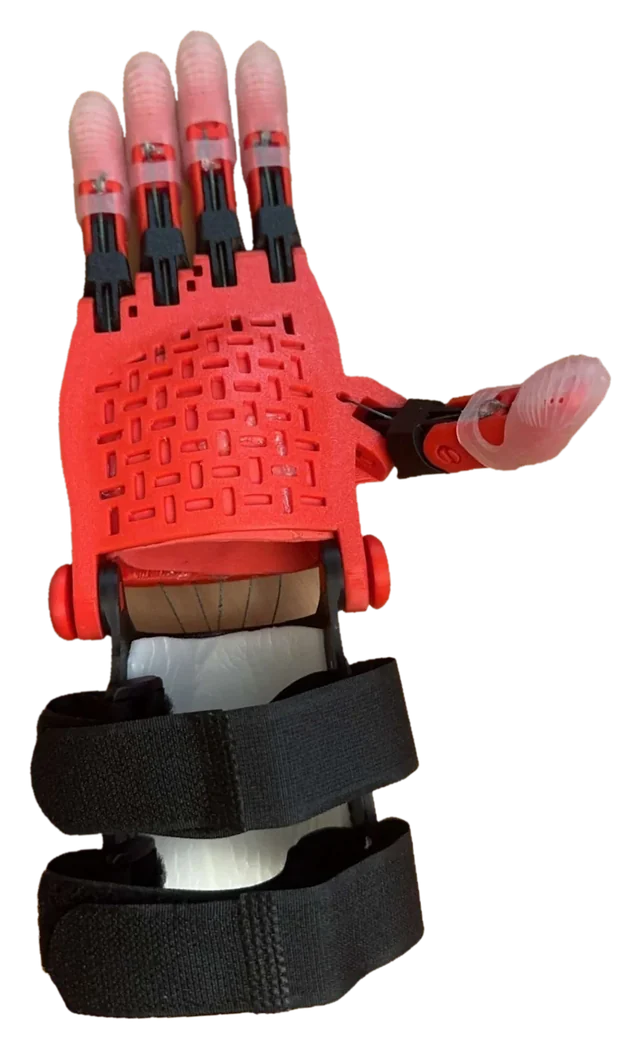
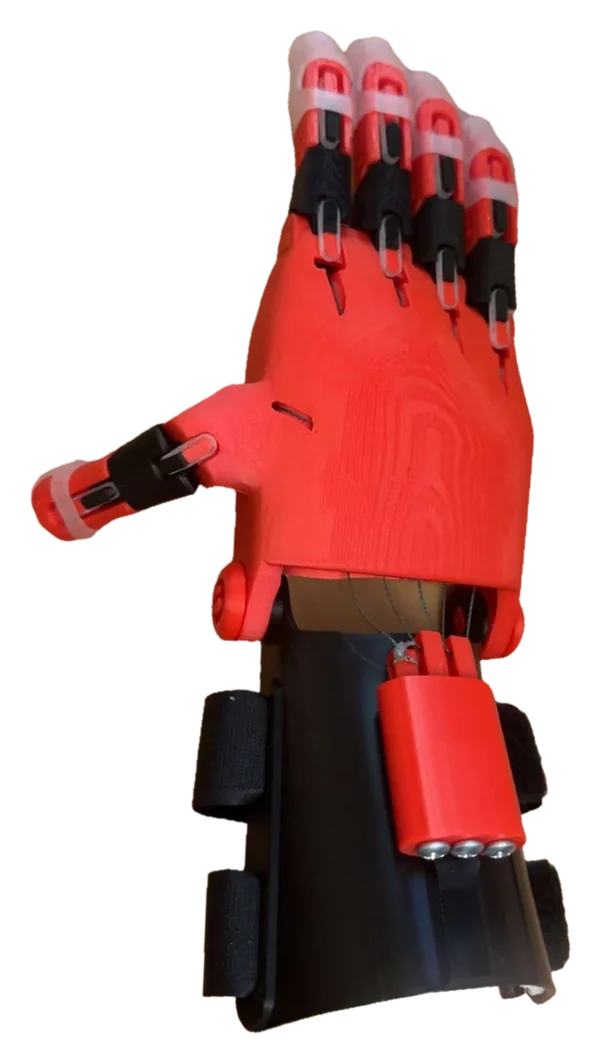
A 3D-printed hand based on the e-NABLE Phoenix v2, which I tailored in Tinkercad for one specific person. It took four design revisions before every finger moved fully.

Moving parts
15+
Design revisions
4
Result
Full finger articulation
Read the case study
The red 3D-printed prosthetic hand seen from the back, with its padded gauntlet, black Velcro straps, and all four fingers extended The same prosthetic hand seen from the side, showing the printed palm, the thumb, and the wrist strap
e-NABLE Phoenix v2, May–Aug 2025

Hardware

  • CAD
  • SolidWorks
  • Assembly

Space Chess Set

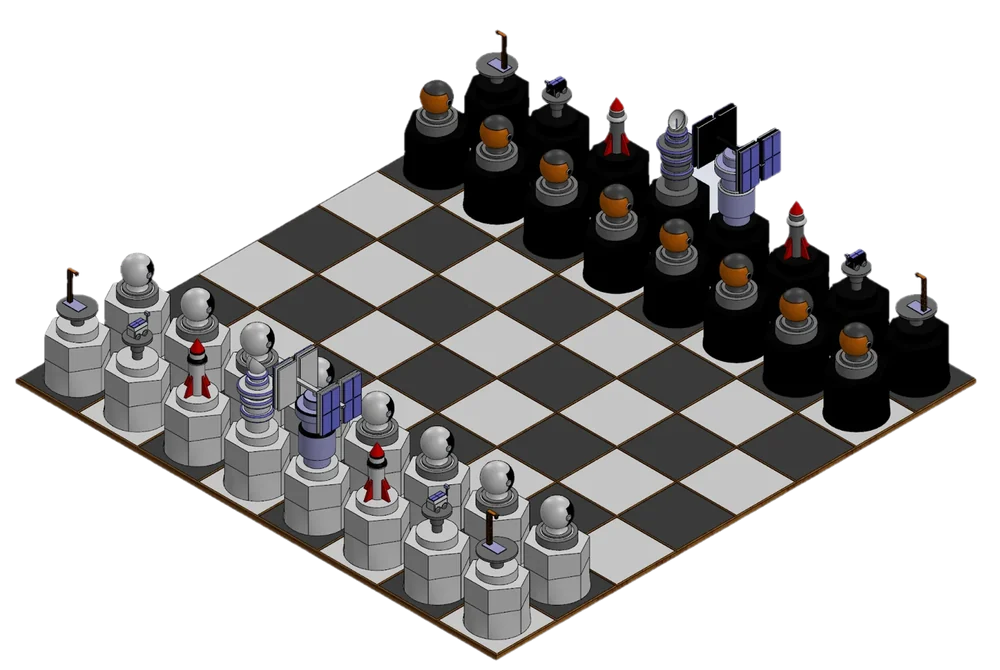
A chess set I modeled in SolidWorks for an assembly assignment. Every piece is space-themed. The king is an orbital satellite, the bishop is a rocket, the rook is a rover, and the pawn is an astronaut helmet.

Piece designs
6
Tallest, the king
212.00 mm
Features used
Revolve, loft, spline
SolidWorks render of the chessboard set up for play: a white set and a black set, each with astronaut-helmet pawns, rovers, rockets, launch pads, a satellite-dish queen and an orbital-satellite king
Space Chess Set, SolidWorks assembly

Software

  • Python
  • numpy
  • xarray
  • netCDF

GTAP Trade Stress Model

A Python research pipeline that traced how an economic shock moves through global supply chains. It ran an input-output model, the standard way to follow a shock from one industry into the industries that depend on it, on two global databases. The case study was the 2010 rare-earths episode.

Sectors × regions
65 × 141
Databases
GTAP 10, OECD ICIO
Figures
9 (21 panels)
Read the case study

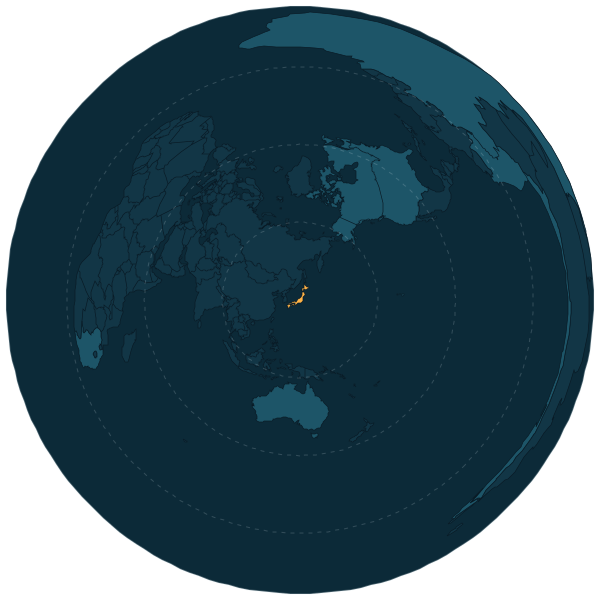
Japan’s metal ore: where it comes from, and where it goes

91%imported

$20bnused in 2019

Where it goes inside Japan

  • Steel mills58%
  • Construction25%
  • Cement and glass10%
  • Other industries7%
Shares of the metal ore Japan’s industries used in 2019, computed from the OECD Inter-Country Input-Output tables (2025 edition). The tables group all metal ores into one sector.

Software

  • MATLAB
  • Data analysis
  • Risk modeling

AI Compute Economics in MATLAB

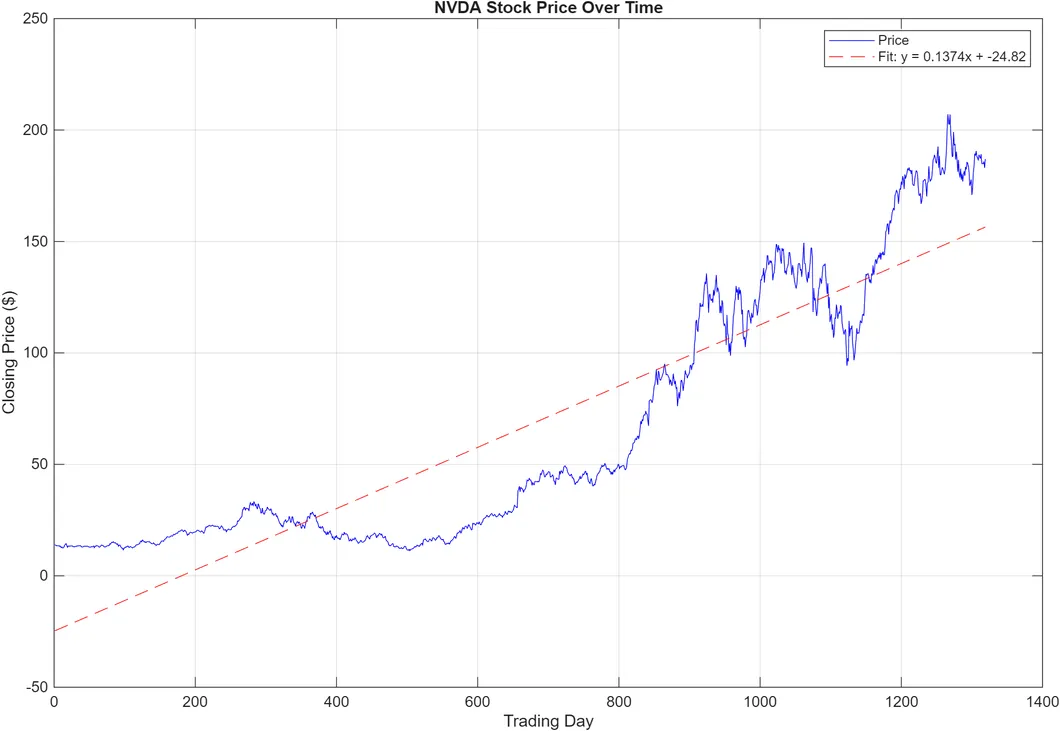
A MATLAB study of NVIDIA’s stock price, which I used as a stand-in for the cost and risk of the AI chips that autonomous systems run on. I used it to argue for cost margins and schedule buffers in my NASA proposal’s early planning.

Average closing price
$65.89
Momentum index (RSI), low / high
8.2 / 97.0
Price trend line
y = 0.1374x − 24.82
Read the case study
MATLAB line chart of NVIDIA closing price by trading day, rising from about $10 to over $200, with a dashed linear trend line
NVIDIA’s closing price with a fitted trend line, plotted in MATLAB.

Software

  • Full-stack
  • Python
  • SQLite
  • BM25

Optimized Learning

An AI study app I’m building. It sorts each class’s materials into a database, and its tutor answers questions with citations to the actual course files.

Database
17 SQLite tables
Course text per question
up to 20,000 characters
Automated tests
960+
Read the case study
Optimized Learning, Apr 2026–present. How the app organizes a class, from the workspace down to a cited answer. The class and file names are examples.

Gamified Budget Box: AutoCAD drawings

Laser-cut panel layouts

AutoCAD layout of the laser-cut panels with interlocking edges, labeled left, right, top, back, and bottom
Panel layout for the laser cutter: left, right, top, back, and bottom
AutoCAD drawing of the panel layout with overall dimensions
Panel layout with overall dimensions
1 / 2

Space Chess Set: SolidWorks files

Assembly render, the set drawing, and a drawing of each piece

SolidWorks render of the full chess set assembly on its board
Assembly render
SolidWorks drawing of the full Space Chess Set: a top view of the 801.59 mm board with all 32 pieces on their starting squares, plus front and side views, dimensioned in millimeters
Set drawing: top, front and side views, 1:10
SolidWorks drawing of the orbital-satellite king, with dimensioned top, front and side views of its solar-panel arms
Orbital Satellite King, 1:3
SolidWorks drawing of the satellite-disk queen, with dimensioned top, front and side views of its stacked rings and dish
Satellite Disk Queen, 1:2
SolidWorks drawing of the rocket bishop, with dimensioned top, front and side views of the nose cone and fins
Rocket Bishop, 1:2
SolidWorks drawing of the launch-pad knight, with dimensioned top, front and side views of the launch tower
Launch Pad Knight, 1:2
SolidWorks drawing of the space-rover rook, with dimensioned top, front and side views of the rover, its wheels and antenna
Space Rover Rook, 1:2
SolidWorks drawing of the astronaut-helmet pawn, with dimensioned top, front and side views of the helmet
Astronaut Helmet Pawn, 1:2
1 / 8

NASA L’SPACE smart node: SolidWorks files

Concept model, rebuilt with AI assistance after the original file was corrupted; dimensions are illustrative

SolidWorks concept model of the smart power node with the lid on, from the front: a flanged aluminum box with a finned radiator lid, three orange-banded front connectors, and green, amber, and red status LEDs
Lid on, from the front
Concept model with the lid on, from the back: the finned lid, a telemetry port, and two CAN connectors on the back wall
Lid on, from the back: the telemetry port and the two CAN connectors
Straight-on front view of the concept model: DC bus A and B and the priority-load connector, each with an orange high-voltage band, beside green, amber, and red status LEDs
Front view: DC bus A and B, the priority-load output, and the status LEDs
Concept model with the lid off, seen from the front: the three front connectors, the tall copper heat bar behind them, inductors, capacitors, and the controller board on brass standoffs
Lid off, from the front: the copper bar carries heat up to the lid
Concept model with the lid off, seen from the back: four black silicon-carbide switches clamped to a copper bar, two copper toroid inductors, yellow film capacitors, a row of blue bus capacitors, the navy controller board, and two CAN connectors and a telemetry port on the back wall
Lid off, from the back: switches on the copper bar, converters, and the controller board
Top view of the concept model with the lid off, showing the board layout from the front connectors and current sensors to the controller board and back-wall connectors
Top view of the layout, lid off
1 / 6

About

I'm Benny Lee, a second-year Mechanical Engineering student at Northeastern University. I graduate with my BSME in May 2029.

Most of my projects live where a machine and its code have to work together, like a box with servo-driven doors or a game that times button presses to under a millisecond. That’s why I study both sides. Outside of class I’m an undergraduate researcher and PEAK Summit Fellow in Northeastern’s Financial Stress Lab, and every week I teach hands-on STEM workshops to K–8 students with STEMout.

Away from engineering, I’m a two-time national Taekwondo sparring champion and a three-time New York All-State track athlete. I speak Korean, play piano and guitar, and bring a camera whenever I travel or go snowboarding.

I'm looking for a spring 2027 co-op in mechanical engineering or computer science.

Headshot of Benny Lee in a dark suit, white shirt, and tie

Skills and tools

Hardware

  • Siemens NX, SolidWorks, and AutoCAD
  • Tinkercad for quick parts and assemblies
  • Digital assemblies to check fit and motion
  • Laser cutting parts and mounts
  • 3D printing and iterating on prints
  • Laser-cut plywood with dovetail joints

Embedded systems and data

  • Raspberry Pi Pico firmware in Python
  • Servo mounts, plus buttons, LEDs, and buzzers driven from Python
  • Real-time input and timing logic
  • Two-layer fault-protection architecture
  • MATLAB data analysis

Software

  • Python, Java, C++, and MATLAB
  • numpy, scipy, pandas, xarray, matplotlib
  • SQLite and BM25 retrieval
  • pytest and large automated test suites
  • Numerical optimization and data pipelines

Contact

I’m happy to walk you through any of these projects. Email is the fastest way to reach me.